
SCHOOL DESIGN · ESSAY
Schools Aren't Failing Your Children. They're Doing Exactly What They Were Built To Do.
The word "failing" assumes the system has goals it isn't hitting. What if the system is hitting its goals perfectly, and those goals were never the ones you would set for your child?

Tirzah Elese Bagnulo
Founder & CEO, ExelAcademy · 10 min read

You built something. A company, a career, a portfolio, a practice. You know what real capability looks like in the world: the kind of judgement, initiative, resilience and taste that separates the people who get chosen from the people who get managed.
And then you look at your kids. And you look at their school. And there's a gap you can't quite name.
You're not alone in seeing it. Two out of three parents will tell you, privately, that school isn't working for their child. A UK-based survey of 2,000 parents found 66% believe the current model does not work for their child. In the United States, public confidence in schools has fallen to 26%, a historic low. 1.2 million American students have left public schools since 2020. In the UK, private school enrolment fell by around 13,000 students in a single year after the government's 20% VAT was applied to fees in January 2025, and the quiet exodus into homeschooling, microschools and online alternatives is accelerating on both sides of the Atlantic.
But here's what's strange. Even parents who can afford the best, the $60,000-a-year American prep schools, the top UK independent schools at £45,000 a year, the elite European boarding institutions, are increasingly coming to the same uncomfortable conclusion. The pedigree is fine. The credentials are fine. Maybe the prestigious connections are supportive to a point. But something about the young person on the other end is not becoming the kind of adult they'd hire, fund or follow.
Why?
Because the architecture is the same. And the architecture is the problem.
The school system isn't failing your child. It's succeeding at exactly what it was built to do.
It was built to rear submissive, moderately informed humans, conformed to one way and one mindset.
The issue is that what it was built to do is not what your child needs today. Not what humans were designed to be, and not what you want for them.
The Prussian Blueprint Your Kid's School Is Still Running
In 1843, a Massachusetts lawyer named Horace Mann took a trip to Europe. He was particularly interested in Prussia, which he said had "long enjoyed the most distinguished reputation for the excellence of its schools." He came home evangelising.
What had the Prussians built?
The Prussian school system was not designed to produce curious, independent thinkers, and it wasn't trying to. It was designed explicitly, on the record, to produce loyal, time-disciplined, literate-but-not-too-literate soldiers, workers and civil servants for an emerging industrial state. Kids were sorted by age. Taught by a single authority figure. Drilled on standardised material. Rewarded for compliance. Punished for questioning. Trained to respond to bells. Trained to sit still. Trained, above all, to wait their turn and ask permission.
Mann imported that model to Massachusetts. By 1852, Massachusetts had passed the first compulsory attendance law in America. Other states followed. Britain had already moved in the same direction with the 1870 Elementary Education Act and made attendance compulsory by the early 1880s. France under Jules Ferry. Germany, of course, as the original. Most of modern Europe built its public and private school systems on the same 19th-century industrial template. The American public school, the British grammar school, the French lycée, the international prep school: they are cousins, not alternatives. All descended from the same blueprint.
This isn't folk history. The architect of American school administration put it in writing. In 1916, Ellwood Cubberley, Dean of Stanford's School of Education, published Public School Administration. It trained two generations of American superintendents. In it, he wrote:
"Our schools are, in a sense, factories, in which the raw products (children) are to be shaped and fashioned into products to meet the various demands of life. The specifications for manufacturing come from the demands of twentieth-century civilization, and it is the business of the school to build its pupils according to the specifications laid down."
Ellwood Cubberley, Public School Administration (1916)
Read that twice. The man who designed the American school administrative model called children raw products. Called schools factories. Called the curriculum manufacturing specifications.
This is not a hot take. This is the operating manual.
What the Factory Was Built to Produce
A factory producing obedient industrial workers needs to teach a very specific set of behaviours. Look at your child's school day and check them off:
- Response to bells. Factory whistles, relabelled.
- Sitting still in rows for long periods. Assembly-line discipline.
- Doing what you're told without needing to understand why. Middle management.
- Producing output on a strict schedule regardless of whether you're ready. Quotas.
- Being evaluated by a single authority against a single metric. Annual performance review, age 6.
- Ignoring your body's hunger, tiredness and need to move until permitted to act on them. Shift work. (Don't go to the toilet... well, that's another rant for another day.)
- Treating creativity and questioning as disruption. Labour compliance.
By this standard, your child's school is not failing. It is an extremely effective machine, doing precisely what the 1843 blueprint said to do. The bell still rings. The rows are still there. The permission slips, the hall passes, the standardised tests, the raised hands, the age-based cohorts that have no basis in developmental science: all of it is 180-year-old industrial infrastructure, preserved in amber, still running.
Elite private schools are not exempt from this. The walls are nicer, the textbooks are newer, the signalling is better. But the architecture is the same: one teacher to many students, age-batched cohorts, grades, bells, authority from the top down. It's the same machine. A Rolls-Royce is still a car.
Phillips Academy is still a Prussian factory. Eton is still a Prussian factory. Le Rosey is still a Prussian factory. Different crests, same blueprint.
The output is exactly what the design produces: a compliant, credentialed young adult who has been trained for thirteen to fifteen years that learning is something done to them, not by them. Who waits to be told what to do. Who optimises for what is being graded. Who has never, not once, shipped a real thing into the real world.
You, of all people, know that's not enough.
Why It Matters Now, More Than Ever Before
Your kids are not walking into the world you walked into.
Half the jobs they'll do don't exist yet. The ones that do exist will be reshaped by AI in ways nobody can model. The credentials that worked for your generation (degree, résumé, climb) are being devalued in real time. Gen Z men with college degrees now have roughly the same unemployment rate as non-graduates. The $100,000+ bachelor's degree is losing its premium while they're still learning to read.
The world your child walks into will reward, more than anything else:
- Agency. The ability to start things without being told.
- Taste. The ability to tell good from bad without a rubric.
- Real skills. The ability to build, sell, fix, code, cook, communicate, negotiate.
- Adaptability. The ability to reinvent when the ground shifts.
- Emotional depth. The ability to work with humans and know yourself.
Show me where in a 2026 school day any of those are being built. Not mentioned. Not "covered." Actually built, practised, mastered, shipped.
The factory was designed to produce the opposite. It was designed to produce people who follow instructions well and wait for permission. Those are the people who are going to be automated first.
This isn't a reform problem. You can't reform a machine into becoming something it was never designed to be. You can paint it a new colour. You can add an SEL curriculum on top. You can hang a rainbow flag on the front doors. But the bell still rings. The rows still exist. The clock still runs the child.
The question isn't "how do we fix school?"
What did I actually want for my child in the first place, and is there a school serious enough to build it?
What We Built at ExelAcademy
ExelAcademy started from a premise that will sound radical until you realise it's obvious. If you were designing education from scratch today, for your child, for the world they're actually walking into, you would not build an 1843 factory. You would build the opposite.
You might build a far more personalised model, where each learner gets what they need to understand, matched exactly to their interests, levels, abilities and life goals. Research since Benjamin Bloom's 1984 "2 Sigma" paper has shown that one-to-one tutoring moves an average student to the 98th percentile. The reason every child didn't already have a personal tutor was cost. That constraint no longer exists.
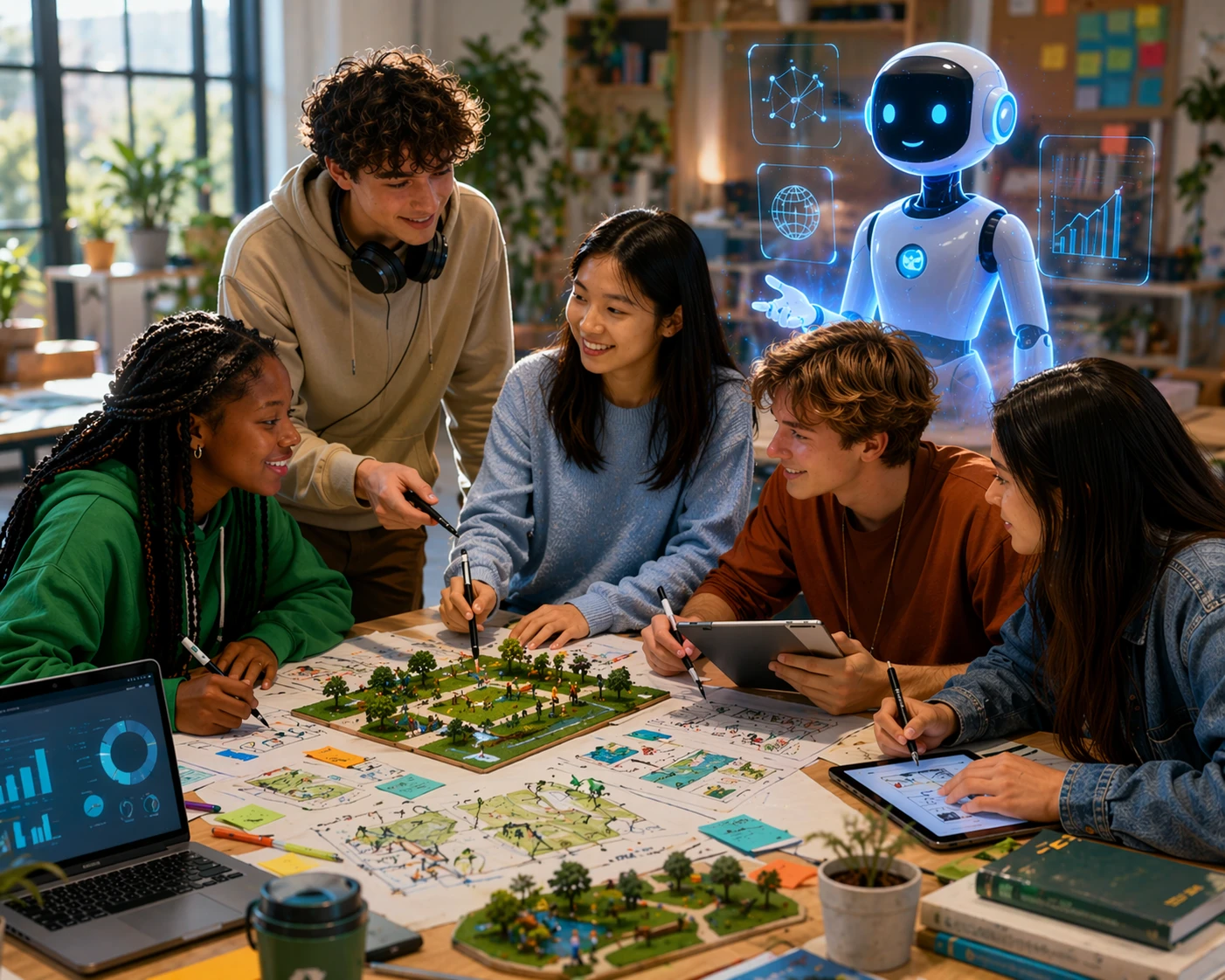
The dawn of AI and technology platforms has changed this for the human race. Every ExelAcademy student has an adaptive, patient, world-class tutor for every subject. We are using AI to do this. Not a standard chatbot, but a highly programmed, sophisticated and adaptive tutor. We call them ExelTutors™.
You would build in dedicated time (real hours, real sessions, real apprenticeships) to teach your child the skills their actual world will demand of them. This isn't radical. It's the oldest idea in parenting. Throughout human history, in every race and every culture, mothers and fathers have handed their children the knowledge, judgement and craft their community required. From the earliest of ages, because they understood their children would one day need to carry the tribe forward when they themselves were gone. That is what education was for. A 50,000-year chain of transmission, almost unbroken, until now.
Our modern society has quietly handed that job to a system that serves no one but itself: one that gives governments the attainment data they need to burnish their own reputations, gives ministers a graph to wave at the next election, and forces our children to perform in subjects and tests that mean almost nothing to them, so that we, as parents, can reassure ourselves the system is still working, and so that the system, in turn, can reassure itself it is still needed. The trade is a bad one. Our children sit at the bottom of this pressure tower and lose the very capabilities their world is about to demand of them.
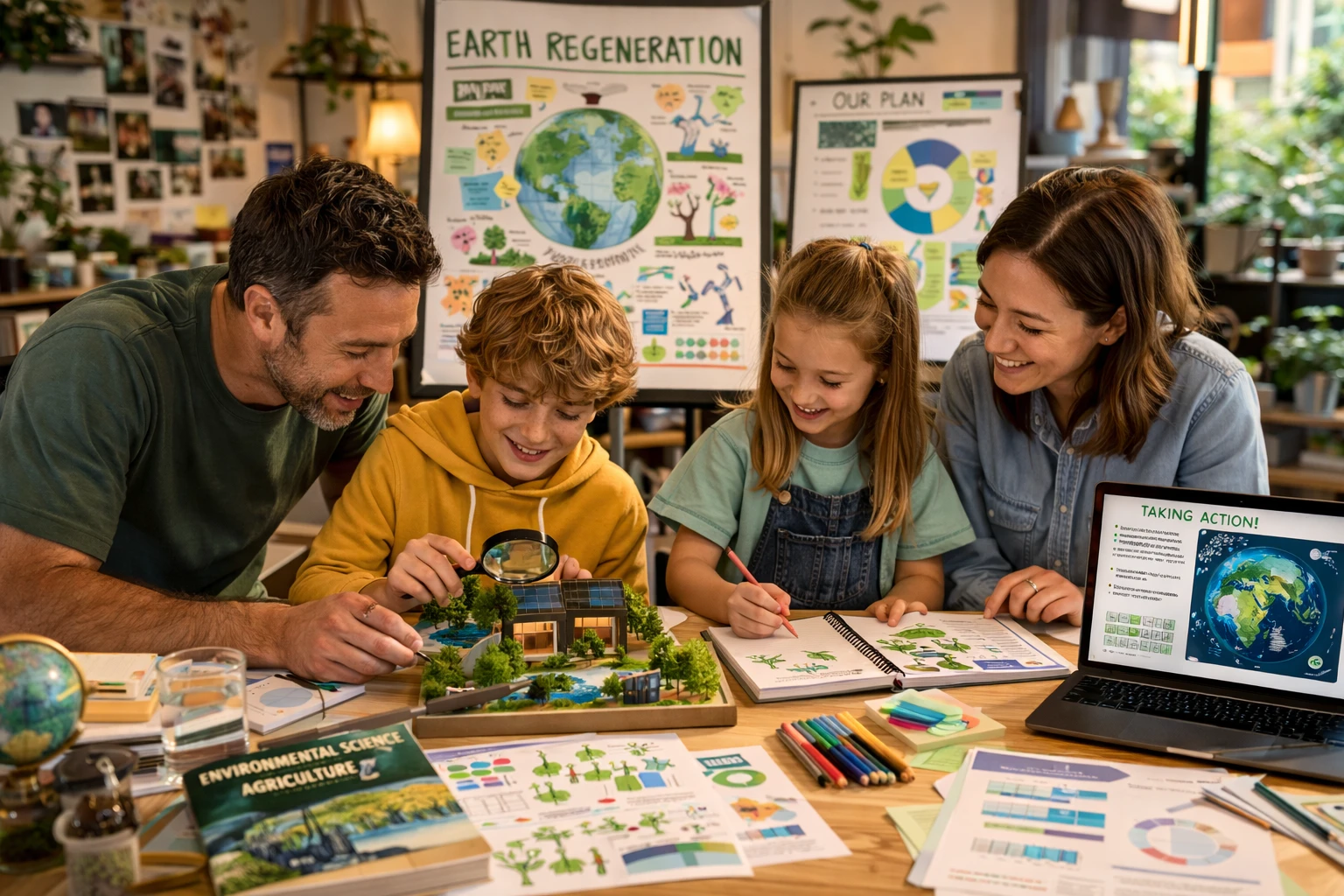
ExelAcademy has created true project-based, relevant, meaningful challenges with real-world risk and reward that demand young people build something, sell something, fix something, create something. We call them ExelQuests™. Because the brain evolved for active mastery, not passive reception. And because when your daughter has already launched three micro-businesses, interviewed a venture capitalist, shipped a coded app, apprenticed with a builder and run a community event, she walks into the world with a portfolio of capability, not a transcript of compliance.
Isn't this the school you would build for your son?
You would build mentorship and a mixed-age community, because that's how humans have learned for 200,000 years, and because the people who shape your child should look like the people they'll become.
You would build a school that ends not with a diploma, but with an 18-year-old who is already a capable, contributing, self-directed human; five, ten years ahead of their credentialed peers.
That is the teenager who inherits the future. That is the human we are building.
If you've read this far, you're probably not hoping your child becomes a slightly better factory graduate. You're hoping for something more.
About Tirzah
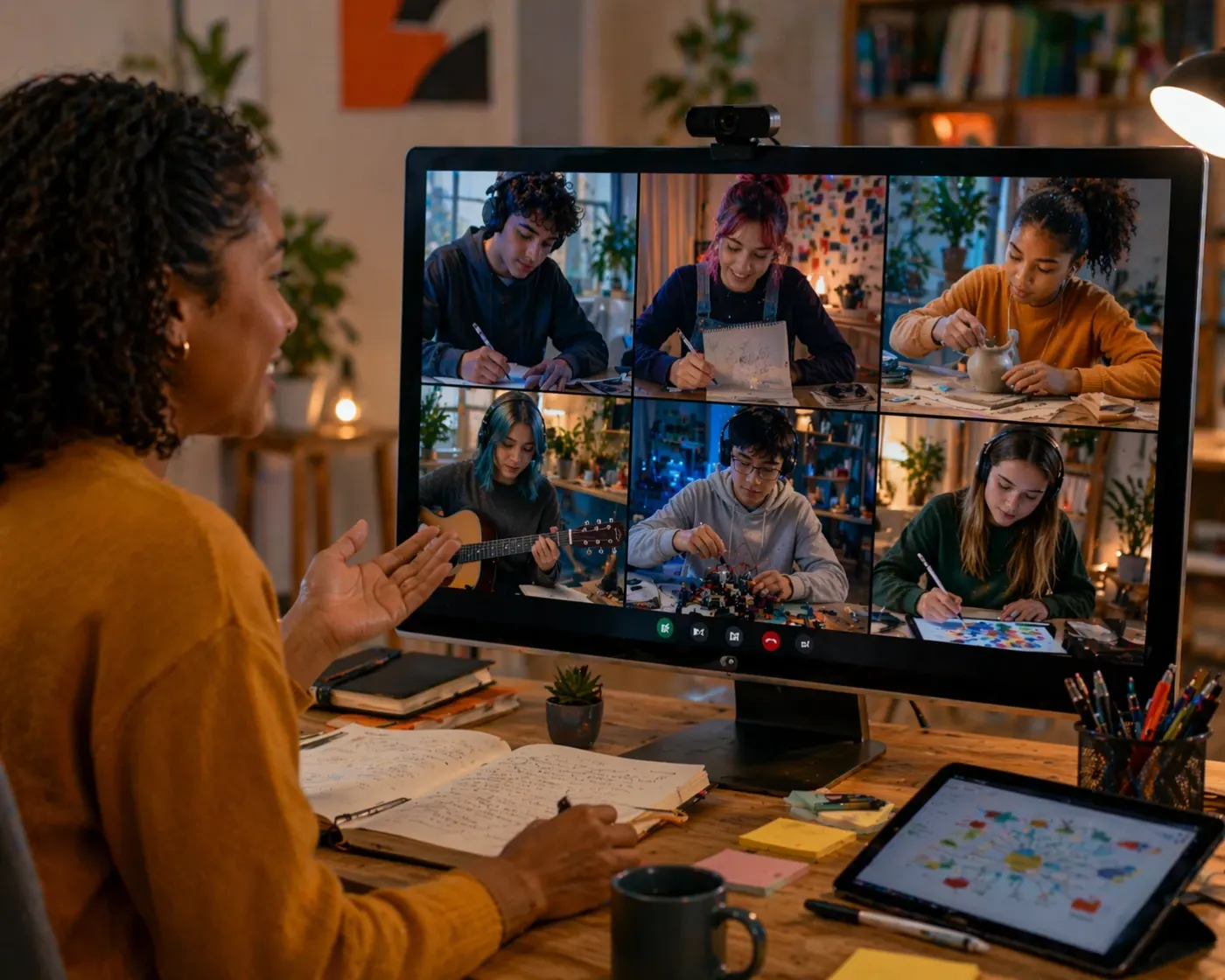
Tirzah Elese Bagnulo is Founder and CEO of ExelAcademy, a human-led, AI-enabled online school. She brings more than three decades of teaching and educational transformation, fifteen years of studying how the brain learns, and is the author of The Learning Commitment. Tirzah Talks is where she thinks out loud about what education is for, now that AI can do so much of what it once focused on.
Sources & further reading (12)+
- Sustain Health Magazine. Why Parents Say the Education System Is Broken (UK 2,000-parent survey, 66% figure).
- Gallup. Confidence in U.S. Public Schools at 26% (2023).
- Urban Institute. Where Did the Public School Enrollment Drop Go? (1.2 million figure).
- Schools Week. Private school VAT raids: what's the actual impact? (UK 13,000-pupil drop).
- House of Commons Library. VAT on Private School Fees (policy briefing).
- Wikipedia. Horace Mann (1843 tour of Prussia, Massachusetts common schools).
- Wikipedia. Prussian education system.
- Wikipedia. Elementary Education Act 1870 (UK).
- Ellwood P. Cubberley. Public School Administration (1916), "factories... raw products" passage.
- Larry Cuban. Schools as Factories: Metaphors That Stick.
- Fortune. Gen Z male college graduates have the same unemployment rate as non-grads.
- Benjamin Bloom. The 2 Sigma Problem (1984).
More Tirzah Talks
Find more blogs in Tirzah's Homeschool Network
Join the community for new Tirzah Talks posts, ready-to-use project-based learning, and a place to share your thoughts with families who believe education can be better.