
TECHNOLOGY · OPINION
Don't Ban the Phone. Teach the Child.
England has now made phone-free schools the legal default, and more than thirty US states have moved the same way. The intentions are good. But are we asking the right question? This one is a little controversial.

Tirzah Elese Bagnulo
Founder & CEO, ExelAcademy · 7 min read
The Argument Nobody's Having
From this school year, phone-free schools are the default in England, and it is backed by law. Under the Children's Wellbeing and Schools Act 2026, every state-funded school must now follow the government's mobile phone guidance. Phones are to be handed in, stored away, and kept out of the school day. Ofsted will check how well it is working.
Across the Atlantic, the same wave is building. More than thirty US states have now banned or restricted phones in K–12 classrooms.
Deep in my heart of hearts, I believe the intentions are good. Protecting young people from cyberbullying, reducing distraction, giving them space to simply be present. Those are real concerns, with real benefits. I don't dismiss them for a moment.
But here's the thing nobody is saying loudly enough:
The phone isn't the problem. The absence of guidance is.
Every child who walks out of the school gate at 3:30pm will have a smartphone in their hand by 3:31. They will be on TikTok by 3:32. They will be navigating social media, AI-generated content, group chats, comparison culture and digital rabbit holes, completely alone. Because we chose to ban rather than to teach.
What the Numbers Tell Us
Read those together. Almost every teenager has the most powerful information device ever made in their pocket. Most have had a lesson about being online, but fewer than one in four get regular teaching. And nearly a third are confidently wrong about what is real. Only around one in five can remember a lesson on spotting AI-generated content or identifying adverts.
That isn't a phone problem. It's a teaching gap.
Imagine If We Used Them Instead
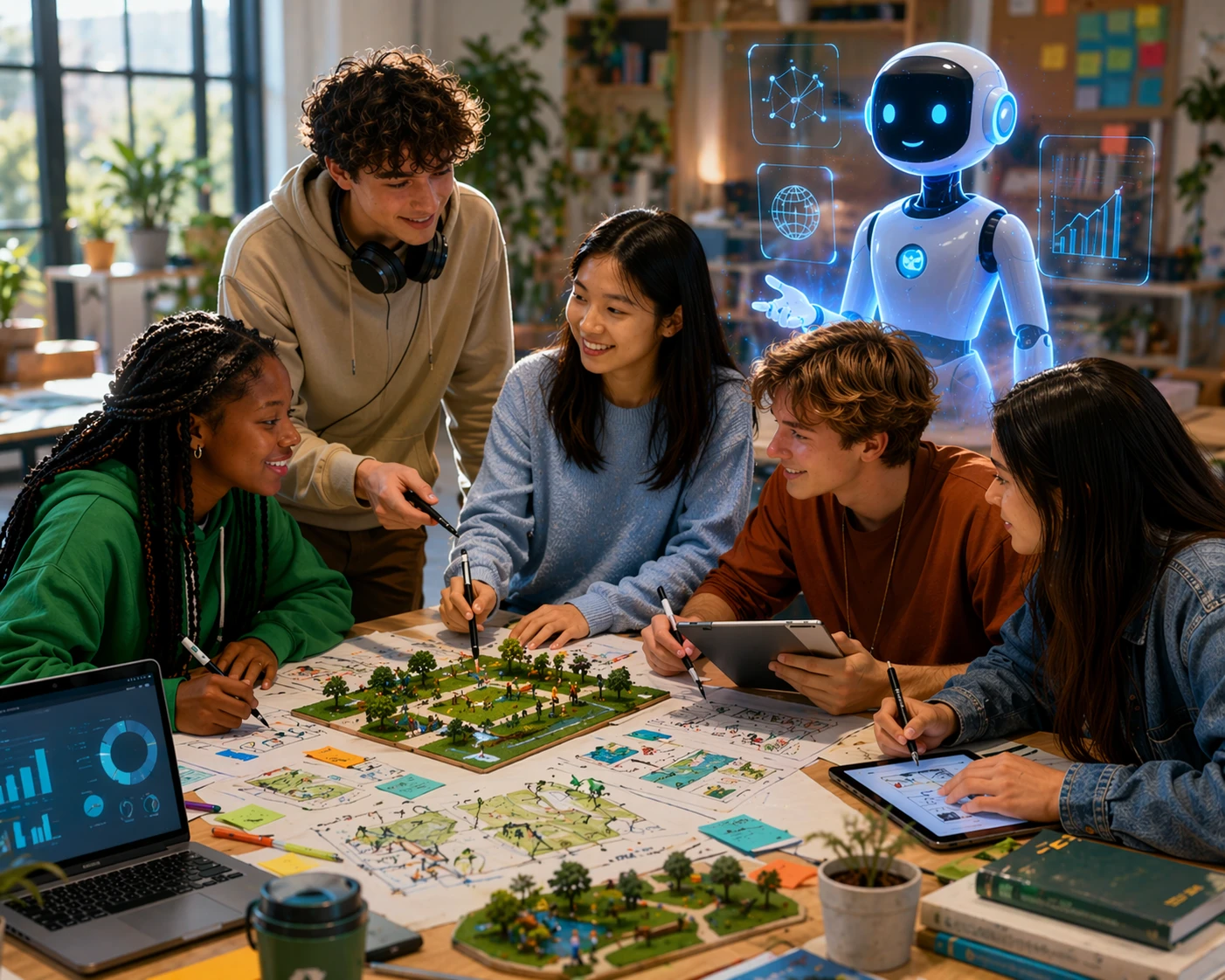
A phone in a student's hand is one of the most powerful learning tools ever created. Here's what a classroom could look like if we leaned in rather than locked out.
01 Live word clouds
"Scan this QR code and tell me: what do you already know about climate change?" Using a tool like Mentimeter, answers appear in real time, anonymously, for the whole room to see. Every voice suddenly matters. Even the quiet ones.
02 Video vlogs
Instead of a written essay, students record a 90-second video explaining what they've learned. Then the class edits them together, in an app like CapCut, into a collective knowledge film. Explaining something to camera is retrieval practice in disguise. And the pride in the finished film is real.
03 AI-assisted research sprints
"Before we start today's lesson, spend three minutes researching this topic. AI, Google, whatever you like. Then tell me the most interesting thing you found, and how you know it's true." That isn't cheating. That is the skill of the future.
04 Student-led debate polls
Use live polling to run real debates in class. Students vote, watch the results shift in real time, and challenge each other's thinking. Democracy stops being a history lesson when you're living it on your screen.
Yes, Even Social Media Can Be Classroom Gold
Here's where it gets bold. I'm not saying let young people scroll TikTok in maths. I'm saying use the very platforms that are causing harm as the subject matter for teaching empathy, activism and critical thinking. Done with care, led by adults, and within proper safeguarding and age limits.
The anti-bullying campaign
Find a real space online where cyberbullying happens. Study it. Understand it. Then design and launch a student-led campaign to counter it. Turn passive scrollers into active changemakers.
The positive presence mission
Find online communities where teenagers feel ashamed of their bodies, their bank accounts, their lives. Then create content that offers something different: warmth, perspective, possibility. Real young people doing real good in the world.
Media literacy in real time
Show students a viral post. Ask: is this real? How do you know? Who benefits from this being shared? You can't teach critical thinking in a vacuum. You need the media they actually consume.
Algorithmic awareness
Let students map their own "For You" pages. What does it say about them? Who curated it? What do they never see? The algorithm is the most powerful unseen teacher in their lives. Let's at least name it.
"Imagine a class of 30 teenagers who leave school knowing how to spot misinformation, run a community campaign and build a positive online presence. That's not a distraction from education. That is education."
It's About Agency. Give It to Them.
We teach children to use a library responsibly. We teach them to cross a road safely. We teach them to handle money, manage relationships and navigate complexity.
But the most powerful tool in their hand, the one they will use every single day for the rest of their lives, we pretend doesn't exist while they are in our care?
Boundaries matter. Phone-free time matters. I'm not arguing against either. I'm arguing against prohibition without education. A ban is a shortcut. It removes the discomfort of having to engage. But on its own, it doesn't prepare anyone for anything. Young people need to learn when to put the phone down just as much as they need to learn how to use it powerfully.
The goal isn't compliance. The goal is wisdom.
And wisdom only comes from practice: guided, thoughtful, purposeful practice. That is what school is for.
We Don't Ban the Tools. We Turn Them Into Quests.
At ExelAcademy, every skill worth having becomes an ExelQuest™: a real-world challenge with real results. Digital judgement, media literacy, building a positive presence, knowing when to switch off. These aren't warnings delivered in an assembly. They are capabilities young people practise, with adults alongside them, until they own them.
Fewer lectures. Fewer bans. More doing, learning and levelling up.
About Tirzah
Tirzah Elese Bagnulo is Founder and CEO of ExelAcademy, a human-led, AI-enabled online school. She brings more than three decades of teaching and educational transformation, fifteen years of studying how the brain learns, and is the author of The Learning Commitment. Tirzah Talks is where she thinks out loud about what education is for, now that AI can do so much of what it once focused on.
Sources & further reading (4)+
- Children's Wellbeing and Schools Act 2026, section 36 (mobile phones in schools; in force 29 June 2026). legislation.gov.uk.
- Department for Education. Mobile phones in schools guidance (statutory from 2026).
- Ofcom. Children and Parents: Media Use and Attitudes Report (published May 2026).
- Ballotpedia. Kansas becomes thirty-third state to enact a K–12 cellphone ban (March 2026).
More from Tirzah Talks
UK EDITION · SOCIAL MEDIA · OPINION
We're Banning the Screen. Are We Skipping the Lesson?
Read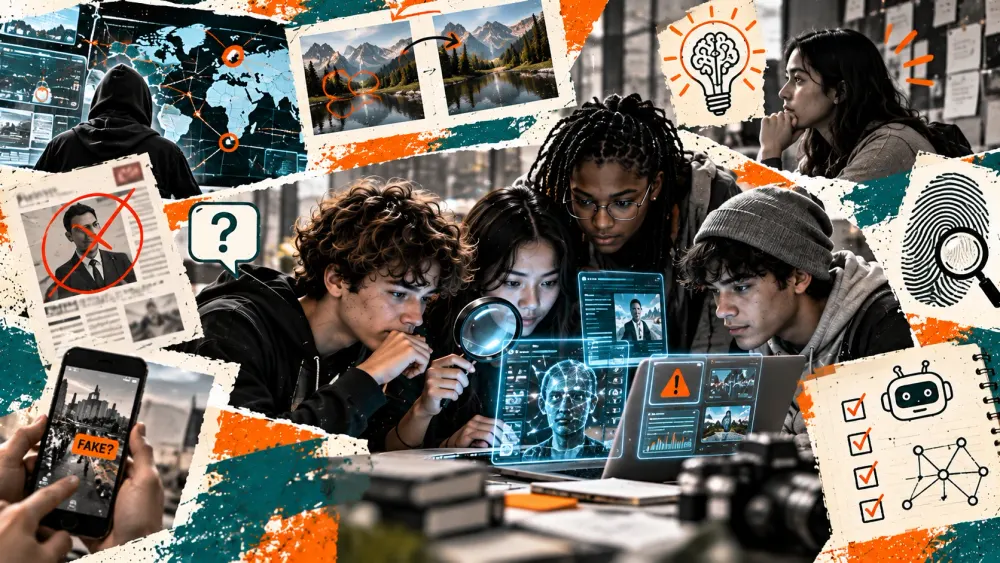
US EDITION · SOCIAL MEDIA · OPINION
America Is Banning the Screen. Are We Skipping the Lesson?
Read
AI & EDUCATION · OPINION
The Cognitive Overload Myth: Why Going Back to Basics Will Cost Your Child Their Future
Read
More Tirzah Talks
Find more blogs in Tirzah's Homeschool Network
Join the community for new Tirzah Talks posts, ready-to-use project-based learning, and a place to share your thoughts with families who believe education can be better.