
UK EDITION · SOCIAL MEDIA · OPINION
We're Banning the Screen. Are We Skipping the Lesson?
On the UK's under-16 social media ban, and the conversation we might be choosing not to have.

Tirzah Elese Bagnulo
Founder & CEO, ExelAcademy · 7 min read
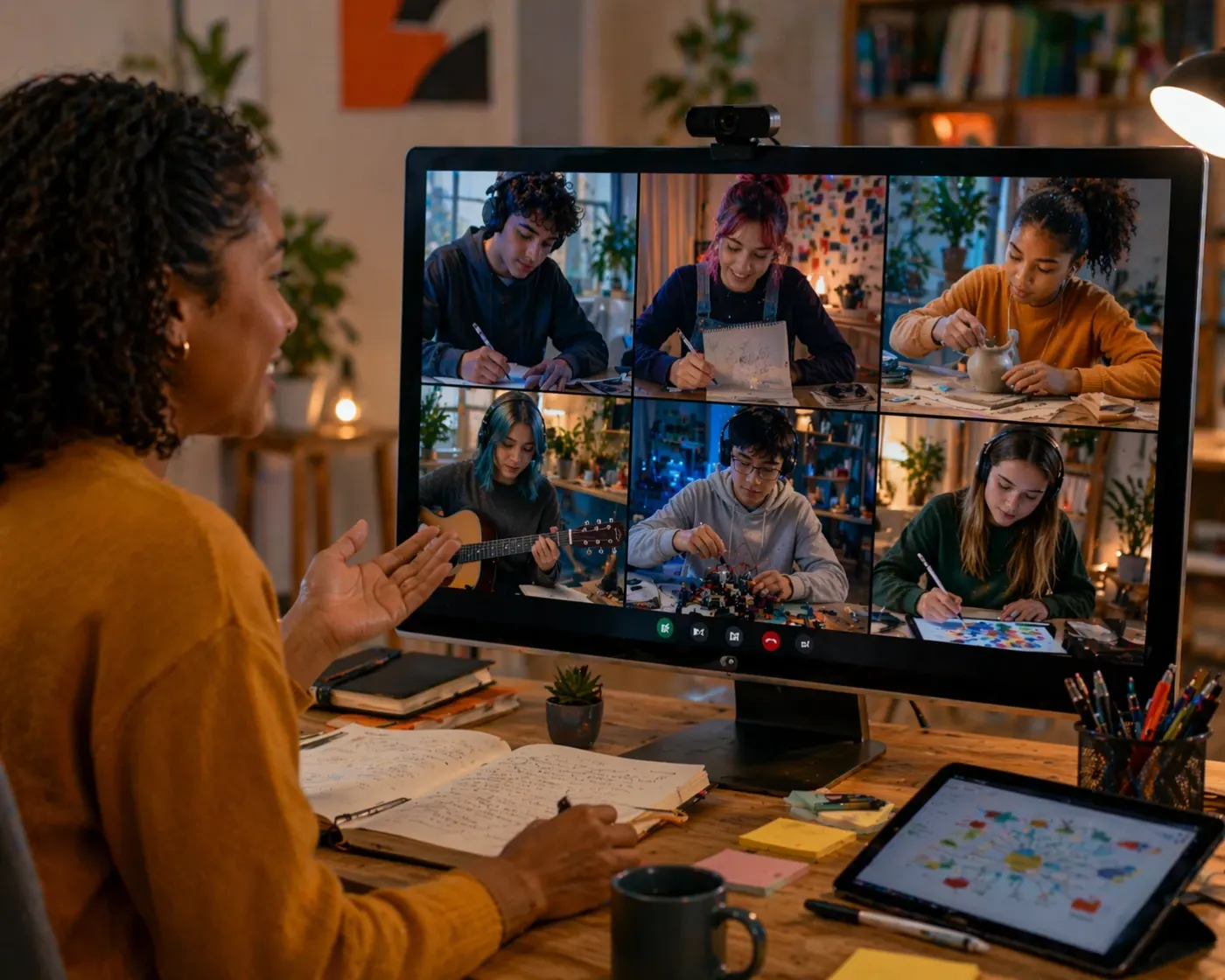
In June, Keir Starmer announced that the UK will ban under-16s from social media platforms including Snapchat, TikTok, Instagram, Facebook, YouTube and X, following Australia's lead and going further. The government calls it the "Australia plus" model: tighter age verification, a ban on romantic and sexualised AI chatbots for under-16s, and new rules to stop strangers contacting children on gaming and livestreaming platforms.
The first regulations are expected before Parliament by the end of this year, with the protections coming into force in spring 2027 if they are approved.
For many parents, this will land as relief. For others, as overreach. I find myself somewhere more uncomfortable than either: genuinely undecided, and increasingly convinced that the version of this debate playing out in the headlines is missing its most important question.
So let's actually sit with this. All of it.
The Case for the Ban Is Real
Start with what we know. The mental health data behind this policy isn't abstract. Self-harm, anxiety and eating disorder referrals among teenagers, particularly girls, have risen sharply over the past decade, and the timeline tracks uncomfortably closely with the rise of algorithmic, engagement-optimised platforms. Esther Ghey, mother of Brianna Ghey, has spoken publicly about her daughter's struggles with her phone and her mental health, and campaigned for exactly this kind of protection. Hers is not an isolated story. It is one many parents recognise in their own homes.
Then there's the neuroscience. Adolescent brains are still building the architecture for impulse control, delayed gratification and emotional regulation, precisely while platforms are engineered, with enormous commercial sophistication, to exploit the gaps in that architecture. Infinite scroll, variable reward schedules, social comparison loops: these aren't accidents of design. If we wouldn't let a 13-year-old walk into a casino, the argument goes, why are we comfortable handing them a device built on similar principles?
There's also something to be said for collective standards. Starmer has been explicit that he isn't persuaded by the argument that "kids will get round it anyway, so why bother." He has compared it to the drinking age, which doesn't stop every 17-year-old getting hold of alcohol, but still sets a societal floor. A line in the sand, even an imperfect one, is not nothing.
But Is a Line in the Sand the Same as a Lesson Learned?
Here's where I start to feel less settled. The drinking age comparison is instructive, but perhaps not in the way it is being used.
Prohibition in the United States didn't eliminate alcohol. It removed it from regulated, visible, socially mediated settings and pushed it into unregulated ones, with consequences that took decades to unwind. The lesson most historians draw isn't simply "banning things doesn't work." It's something more specific:
When you remove something from view rather than changing our relationship to it, you don't remove the behaviour. You remove your ability to influence it.
Early evidence from Australia, where the ban has been in force since December 2025, is already raising this question. Research from the Molly Rose Foundation found that 61% of 12 to 15-year-olds who had accounts before the ban still have access to at least one. Half said the ban had made no difference to their safety online, and 14% said it made them feel less safe. The UK government says it has learned from this and will require "highly effective" age checks. Perhaps it will close the gaps. But Starmer himself has acknowledged that some teenagers will find workarounds, and workarounds discovered and used with no adult conversation attached are a very different thing from supported, visible use.
The Live Teaching Moment We Might Be Removing
This is the part I keep returning to.
These platforms, these algorithms, these dopamine loops are not going away. The 16-year-old handed an account on their birthday walks into exactly the same attention economy as the 15-year-old who wasn't allowed one. Nothing about the tools will have changed. What might have changed is whether anyone ever sat with that young person, in real time, while it was actually happening to them, and asked: What just happened in your brain there? Why did that post make you feel that way? What is it about that comment that landed so hard?
Those conversations are very hard to have after the event, or in theory, or about a platform a young person has never used. They are far easier, and arguably only really possible, in the moment, while the feed is still open on the phone in their hand.
If I were parenting teenagers again today (and I say this with real humility, because the landscape now is so much more complex than it was even eight years ago), I think I'd want to have a very different kind of conversation. Not "get off your phone," but: Let's look at what came up on your feed today. How did that make you feel? Why do you think a stranger's comment about how you look had that effect on you? What would it feel like to scroll past that, rather than stay on it?
That's not permissiveness. It's a different kind of safeguarding: one based on building the internal compass, rather than relying only on the external fence.
Two Things Can Be True
Perhaps the honest position is that the ban and the missing conversation aren't actually in competition. They could be companions. A ban buys time and sets a floor. But a floor isn't a curriculum. If we use the years before 16 purely as years of absence, rather than years of preparation, we may simply be postponing the moment of first contact to an age where the supervision, the modelling and the "let's look at this together" conversations are far less likely to happen at all.
This is something we think about often at ExelAcademy. Not as an argument against the ban, but as a question about what fills the space alongside it. Understanding your own attention, your own emotional responses, your own relationship to validation and feedback: these are forms of literacy as real as reading or arithmetic. And they are learned best in context, not in the abstract.
Over to You
I don't think this is a debate with a clean answer, and I'm wary of anyone, myself included, who claims certainty either way.
So I'd genuinely like to know what you think. If you're a parent, a teacher, or someone who remembers what it was like to be 14 with a phone in your pocket:
Does the ban feel like protection, or like postponement?
And if you could sit with a teenager today while their feed was open in front of them, what's the first question you'd actually ask them?
About Tirzah
Tirzah Elese Bagnulo is Founder and CEO of ExelAcademy, a human-led, AI-enabled online school. She brings more than three decades of teaching and educational transformation, fifteen years of studying how the brain learns, and is the author of The Learning Commitment. Tirzah Talks is where she thinks out loud about what education is for, now that AI can do so much of what it once focused on.
Sources & further reading (6)+
- UK Parliament, Hansard. Social Media Ban for Under-16s (House of Commons, 15 June 2026).
- PoliticsHome. Keir Starmer announces under-16s to be banned from social media (June 2026).
- House of Commons Library. Proposals to ban social media for children (CBP-10468).
- OneID. The under-16 social media ban: where it stands and how it will work (timeline to spring 2027).
- Molly Rose Foundation and YouthInsight. More than 60% of Australian children still using social media despite ban for under-16s (survey of 1,050 children aged 12 to 15).
- Ofcom. Children and Parents: Media Use and Attitudes Report (May 2026).
More from Tirzah Talks
More Tirzah Talks
Find more blogs in Tirzah's Homeschool Network
Join the community for new Tirzah Talks posts, ready-to-use project-based learning, and a place to share your thoughts with families who believe education can be better.