
HOMESCHOOLING · LEARNING
Homeschooling Is Not a Classroom at Your Kitchen Table
More families than ever are choosing to educate their children outside the system. But if we simply recreate the school day at home (the timetable, the worksheets, the subjects, the guilt), we have missed the entire point.
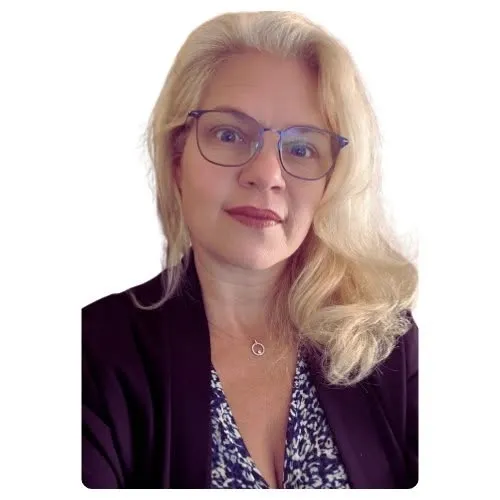
Tirzah Elese Bagnulo
Founder & CEO, ExelAcademy · 10 min read

The numbers are striking. Somewhere between 3.4 and 4.3 million children are now homeschooled in the United States, and the growth rate has more than doubled since before the pandemic. In ten states, home education reached its highest level ever recorded. In England, the number of home-educated children rose by more than 14,000 in a single year. This is not a fringe movement. This is a mass renegotiation of what education is for.
And yet, talk to most families who have just made the leap and you'll hear the same anxiety: Am I doing enough? Are they falling behind? Should we be doing more maths? The guilt arrives almost immediately, and it brings a very specific prescription: replicate school. Buy a curriculum. Set a timetable. Mark the work. Tick the boxes.
This is the trap. And it is the one thing most likely to make homeschooling not work for you. Because if all we are doing is bringing the classroom to the kitchen table, we have not freed our children from anything. We have just changed the address of their limitation. And then the old frustrations set in all over again.
What the Brain Actually Needs to Learn
Neuroscience has spent the last two decades building a picture of how the brain learns best, and it looks almost nothing like a school day. The brain is not a content-processing machine. It is a system built to learn through doing, through context, and through connection to goals that matter.
When a child is genuinely engaged, when what they're doing has purpose and meaning they can feel, the brain releases dopamine, which drives focus, motivation and the consolidation of memory. The hippocampus, which moves learning into long-term storage, works most powerfully not during passive reception of information, but during emotionally connected, goal-directed experience. The brain uses context to organise and keep what it learns, which is exactly what the isolated, subject-siloed lessons of traditional schooling strip away.
Neuroplasticity, the brain's ability to form and reorganise connections, is activated most powerfully when learners are solving real problems and meeting real challenges that strengthen those pathways.
In other words: the brain does not learn best when it is sitting still, receiving instruction and waiting to be tested. It learns best when it is alive to the problem in front of it. When it cares about the outcome. When the knowledge it needs to move forward is knowledge it is motivated to find.
This is not a radical philosophy. It is biology. And homeschooling, done well, is the environment most naturally aligned with it.
A True Story
I want to tell you about Freddie.
Freddie was seven years old when he came into my class, and he carried a reputation no seven-year-old should ever have to carry. He was the boy who struggled. The one who couldn't remember. The one who sat near the bottom of every measure the classroom had to offer, in a system that had already decided, with quiet efficiency, what kind of learner he was.
He came from a Traveller family, one of the traditionally nomadic communities of Britain and Ireland. His was a life lived largely outdoors, built around practical knowledge, physical craft, and the kind of intelligence that doesn't sit still at a desk and wait to be tested.
In my classroom, none of that counted. Until I changed the classroom.
Four afternoons a week, we took our learning outside. We built. We planned. We problem-solved with our hands, our bodies and the full force of our curiosity. We were constructing a camp in the forest: shelters, bridges, flower beds, pulley systems. The children drew blueprints. They wrote letters to parents asking for resources and materials. They calculated measurements, recorded plans and designed structures that had to actually work, because if they didn't, the whole thing came down.
And in the middle of all this, something happened that I have never forgotten.
Freddie came alive.
He was the only child who knew how to tie the knots. The only one who understood, instinctively, how to hoist a pulley system. The only one who could look at a shelter and tell you, before it was built, whether it would hold or fall. The mathematics was there. The science was there. The spatial reasoning, the engineering logic, the precision: all of it was there, and it always had been. It just had no way out through the medium the classroom demanded.
He hadn't been failing to learn. He had been failing to perform learning in the one narrow format the system recognised.
What Freddie needed, what so many children like Freddie need, was not a different level of expectation. It was a different stage. One where what he already knew had somewhere to go. One where his knowledge was not a wrong answer waiting to be corrected, but a right answer waiting to be seen.
The shame that had been quietly building around this child dissolved in a single afternoon. Not because we lowered the bar. Because we finally built a bar he could reach, and when he reached it, he soared past it.
That is what play-based, project-based, experience-led learning does. It does not make things easier. It makes them real. And when learning is real, children who were invisible become extraordinary.
Freddie was never the problem. The room was.
The Permission You Have Been Waiting For
If you are homeschooling, or thinking about it, here is what the science gives you permission to do. Not as a concession, but as your main strategy.
Stop replicating the school day
The timetable, the subjects in isolation, the sit-down-and-complete-this structure: these are institutional solutions to institutional problems. You do not have thirty children. You have yours. The structure can be built around them, not around a system that was never built for them.
Let interest lead
A child obsessed with dinosaurs is learning geology, biology, evolution, chronology and Latin root words, connecting complex ideas joyfully and skilfully without being told to. The brain doesn't recognise subject boundaries. Only curricula do. Follow the obsession and the academic skills follow.
Replace worksheets with projects
A meta-analysis of 66 studies published in Frontiers in Psychology found that project-based learning significantly outperforms traditional teaching on academic achievement, attitudes to learning and thinking skills, with the biggest gains in achievement itself. A child who plans a trip, builds a budget, researches a destination, writes the itinerary and navigates the journey has used more maths, literacy, geography and critical thinking than a term of worksheets could ever produce.
Make real life the curriculum
Cooking is chemistry, fractions and cultural history. A garden is biology, ecology and patience. A small business, even a lemonade stand, is economics, arithmetic, marketing and persuasive writing. The academic skills are not separate from life. They were always extracted from it. Put them back.
Let them be bored
Boredom is not a failure of homeschooling. It is the precondition for creativity. A brain that is not constantly stimulated from outside begins to generate its own ideas, and that self-directed thinking is one of the most important capacities a child can develop.
The Guilt Is the System Talking
The anxiety homeschooling parents feel, the nagging sense that they are not doing enough, that their child is falling behind some invisible benchmark, does not come from the child. It comes from absorbing a system's logic and carrying it with you after you've left.
That logic says: learning must be measured to count. Time must be structured to be productive. Progress must be visible, gradeable and comparable with thirty other children born the same year. Without these things, the fear sets in.
But consider this. Research summarised by the National Home Education Research Institute (NHERI) reports that homeschooled students typically score 15 to 25 percentile points above their schooled peers on standardised tests. These studies largely compare families who chose to homeschool, so they can't prove that homeschooling alone caused the difference. But they do show something important: the fear that your child will automatically fall behind is not supported by the evidence. The benchmark was always the wrong one.
NHERI also points to the competencies home-educated young people tend to develop: resilience, self-direction, creative problem-solving and the ability to manage their own learning. These are not soft extras. They are exactly the skills that research on the future of work, from the World Economic Forum to McKinsey, identifies as critical for the decades ahead. Not memorisation. Not compliance. The capacity to think independently and keep learning.
Experiences Over Lessons. Challenges Over Tests. Projects Over Pages.
The reframe that changes everything for homeschooling families is this: academic skills are not the goal. They are the tool. Mathematics is not something you learn to pass a test. It is what you reach for when you need to solve a real problem. Writing is not an exercise. It is how you communicate something you care about to someone you want to reach.
When the project comes first (when the challenge, the experience, the quest is the thing) the academic skills are pulled in naturally, purposefully, and with the kind of deep understanding no worksheet can produce. A child who needs to cost the materials for something they are building will learn more arithmetic in an afternoon than in a week of drills. A child writing a story they genuinely want to share will master grammar, vocabulary and structure with an urgency no teacher can manufacture.
This is the heart of how ExelQuests™ work. Not lessons delivered to a passive learner, but challenges that pull the learner forward, that require reading, reasoning, calculating, communicating and creating in service of something meaningful. The curriculum is embedded in the quest. The assessment is in the outcome. The learning is real because the goal is real. And for older learners whose families want academic rigour alongside the adventure, our adaptive ExelTutors™ handle the personalised practice, so the rest of the week can be lived.
You do not need to replicate school to give your child an exceptional education. You need to give them a life rich enough, challenging enough and purposeful enough that learning becomes the natural result of living it fully.
The families leaving school are not making a fearful choice. They are making a courageous one: a declaration that their child's education will be built around who that child actually is, not who the system needs them to be.
The kitchen table is not a classroom. It is a launchpad.
And the world (every market, every museum, every kitchen, every garden, every conversation with someone who knows something you don't) is the curriculum.
Stop trying to replicate the institution. Start building the life. The learning will take care of itself.
About Tirzah
Tirzah Elese Bagnulo is Founder and CEO of ExelAcademy, a human-led, AI-enabled online school. She brings more than three decades of teaching and educational transformation, fifteen years of studying how the brain learns, and is the author of The Learning Commitment. Tirzah Talks is where she thinks out loud about what education is for, now that AI can do so much of what it once focused on.
Sources & further reading (6)+
- Johns Hopkins Institute for Education Policy, Homeschool Hub. Homeschooling growth in 2024–2025 (4.9% average growth; data from 28 states).
- Department for Education. Elective home education: autumn term 2025/26 (126,000 children on census day).
- Alpha Omega Publications. Homeschool statistics in the US (estimates of 3.4 to 4.3 million students; NHERI figures).
- National Home Education Research Institute (NHERI). Research facts on homeschooling.
- Zhang, L. and Ma, Y. (2023). A study of the impact of project-based learning on student learning effects: a meta-analysis study. Frontiers in Psychology, 14, 1202728.
- World Economic Forum. Future of Jobs Report 2025.
More Tirzah Talks
Find more blogs in Tirzah's Homeschool Network
Join the community for new Tirzah Talks posts, ready-to-use project-based learning, and a place to share your thoughts with families who believe education can be better.