How the Exel International Curriculum is built, why it goes deeper than a programme of lessons, and what the accreditors and the curriculum quality reviews found, subject by subject.
Written for school leaders, accreditors and families who want to understand what sits beneath the curriculum.
Standards establish a reference point. They should not establish the limits of learning.
Chapter 1
Why this matters
Young people are preparing for a world that is no longer stable or predictable. Technology, AI, mobility and ecological pressure are changing how knowledge is created and used. Most school systems were designed for a different world: standardised, age-based and measured through narrow tests. The central challenge in education today isn't only academic. It's a crisis of relevance.
The Exel International Curriculum (EIC) was built to answer that challenge without giving up academic rigour. It holds deep, precise knowledge and real-world application together, so that what a learner knows becomes something they can use. Learners leave education not only qualified, but oriented: clear about their strengths, capable of independent thought, and able to contribute.
“The curriculum proposition is one of Exel Academy's clearest strengths.”
GOER & Provisions Plus+, Final Accreditation Report
It is not a digital copy of a school timetable. It is a redesign of how learning is organised, experienced and evidenced.
Chapter 2
A programme, or a curriculum?
Many schools follow a published programme: a box of lessons, a pacing guide and an end-of-unit test. Programmes are useful, and many are well made. But a programme tells a teacher what to do on Tuesday. A curriculum, in the full sense, answers bigger questions: what knowledge matters, in what order it is best understood, how understanding deepens year on year, how you know a learner has truly got it, and what they can do with it.
The EIC is a curriculum in that full sense. It was designed from the ground up, with explicit reference to the National Curriculum of England, the International Baccalaureate and the Finnish National Core Curriculum, then mapped against the US, Texas and Florida standards. The accreditors found “an explicit rationale and a planned structure rather than a collection of disconnected online activities”. It is the architecture a school builds on, not a script it follows.
A typical programme
Topic taught → worked example → prescribed practical → test. Then the next topic.
The EIC
Real question → identify the knowledge gap → Concept Capsule and misconception check → investigation or design → evidence → refined explanation → next challenge.
What stays fixed
The concepts, vocabulary, mathematical demand, safety, mastery thresholds and evidence expectations.
What becomes flexible
The context, local relevance, collaboration, route, pace, the product a learner makes, and how far they stretch.
This is the practical meaning of standardising expectations, not the learning journey.
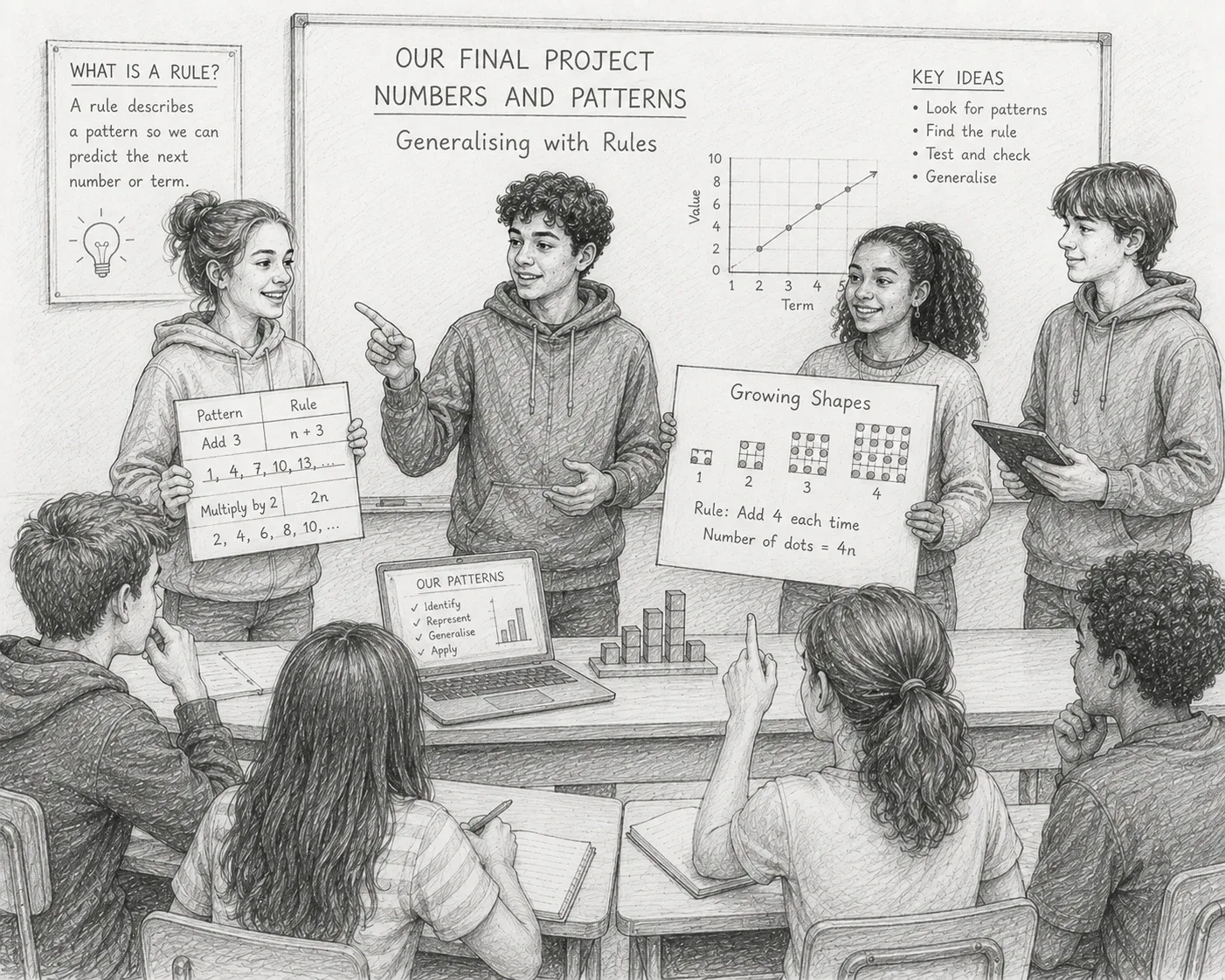
Learners present, explain and defend their thinking: “a rule describes a pattern so we can predict the next term”.
Chapter 3
The architecture
Every subject shares one structure, applied consistently from age 3 to 19. It is what makes the curriculum precise enough to teach and assess, and flexible enough to apply.
Phases, not year groups
Foundation and Formation (ages 3–10), Orientation and Direction (ages 10–19). Learners work at the phase that fits their evidence, not their birthday: they move ahead where they're flying and take more time where they need it.
Themes
Big, connected ideas that recur and deepen across phases, so learners revisit powerful ideas with better tools instead of meeting disconnected chapters.
Concept Capsules
Small, coherent bodies of understanding. A capsule can be taught directly, revisited when a misconception appears, or pulled in just in time when a project needs it.
Core Facts and I CAN statements
The precise knowledge in each capsule, each with a Micro Check, a misconception to confront, the evidence a learner produces and a stretch challenge.
Around the content sit the human foundations: six Human Pillars (Human Flourishing, Human Capabilities, Human Authority, Disciplines of Human Understanding, Essential Belonging and Authentic Humanity), six academic focus areas, and RISE (Realise, Innovate, Strategise, Execute), the leadership cycle learners use to tackle real problems.
AI is used deliberately and always under Human Authority. The ExelTutor teaches through a clear cycle (Recall, Teach, Try, Check, Evidence, Next Steps), and its role grows with the learner: an investigation companion at 10, a research and Socratic-argument partner at 17. Every learner has a designated human mentor, and judgement, safeguarding and accountability stay with people. The accreditors called the human-led, AI-enabled principle “one of the most important features of Exel Academy's vision”.
Chapter 4
From knowing to doing
Across the model, roughly 20% of learning time is focused instruction and 80% is application: projects, investigations, collaboration and extended work. Academic expectations don't drop; the balance is designed so knowledge is used, tested and remembered.
This is not project-based learning bolted on after the “real” lessons. The link between knowledge and application is built into the architecture. A learner trying to keep a community space cool without power discovers they need heat transfer; they go to that capsule, build a better model, then redesign and retest. The project gives the knowledge a reason to exist, and the knowledge makes the project work.
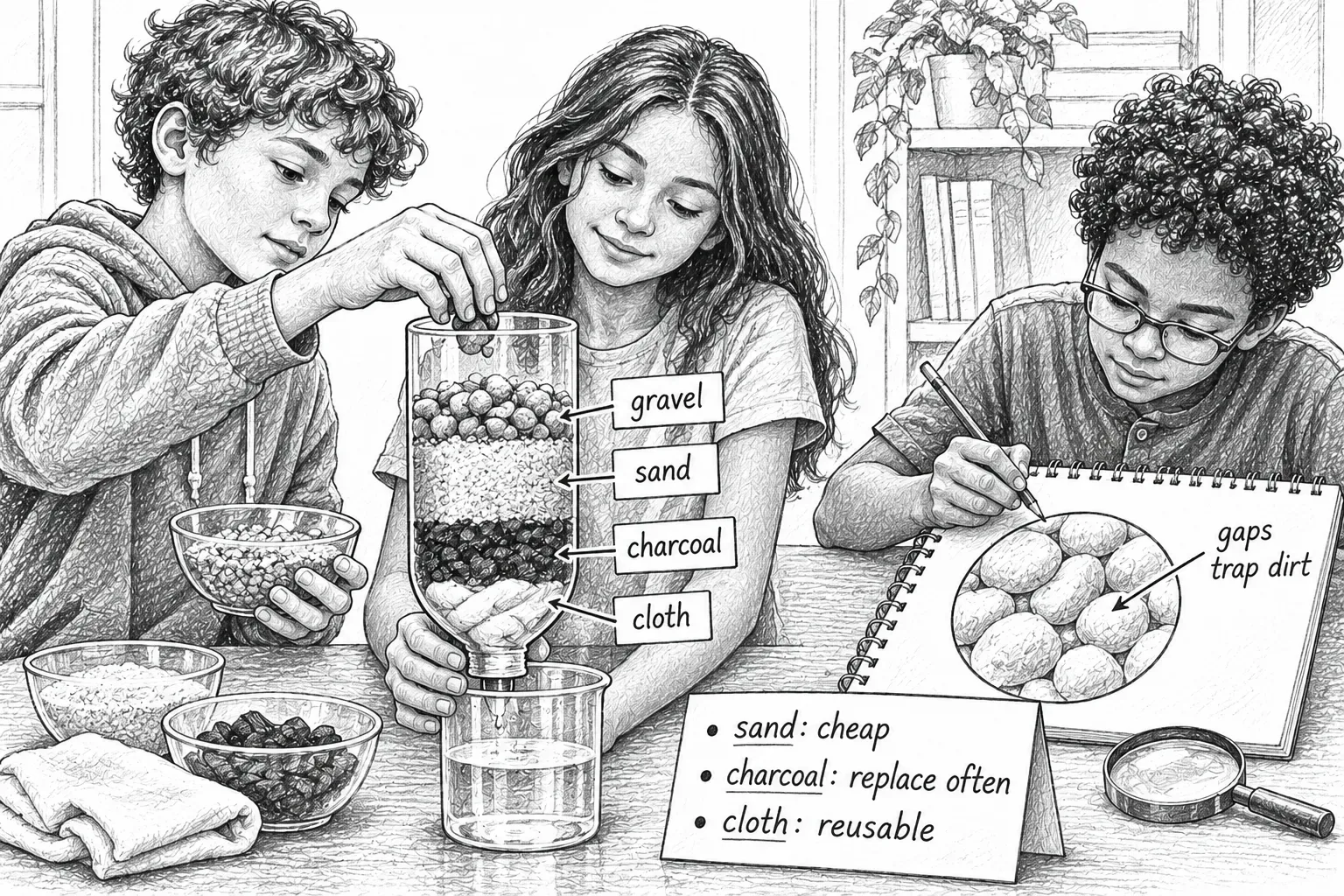
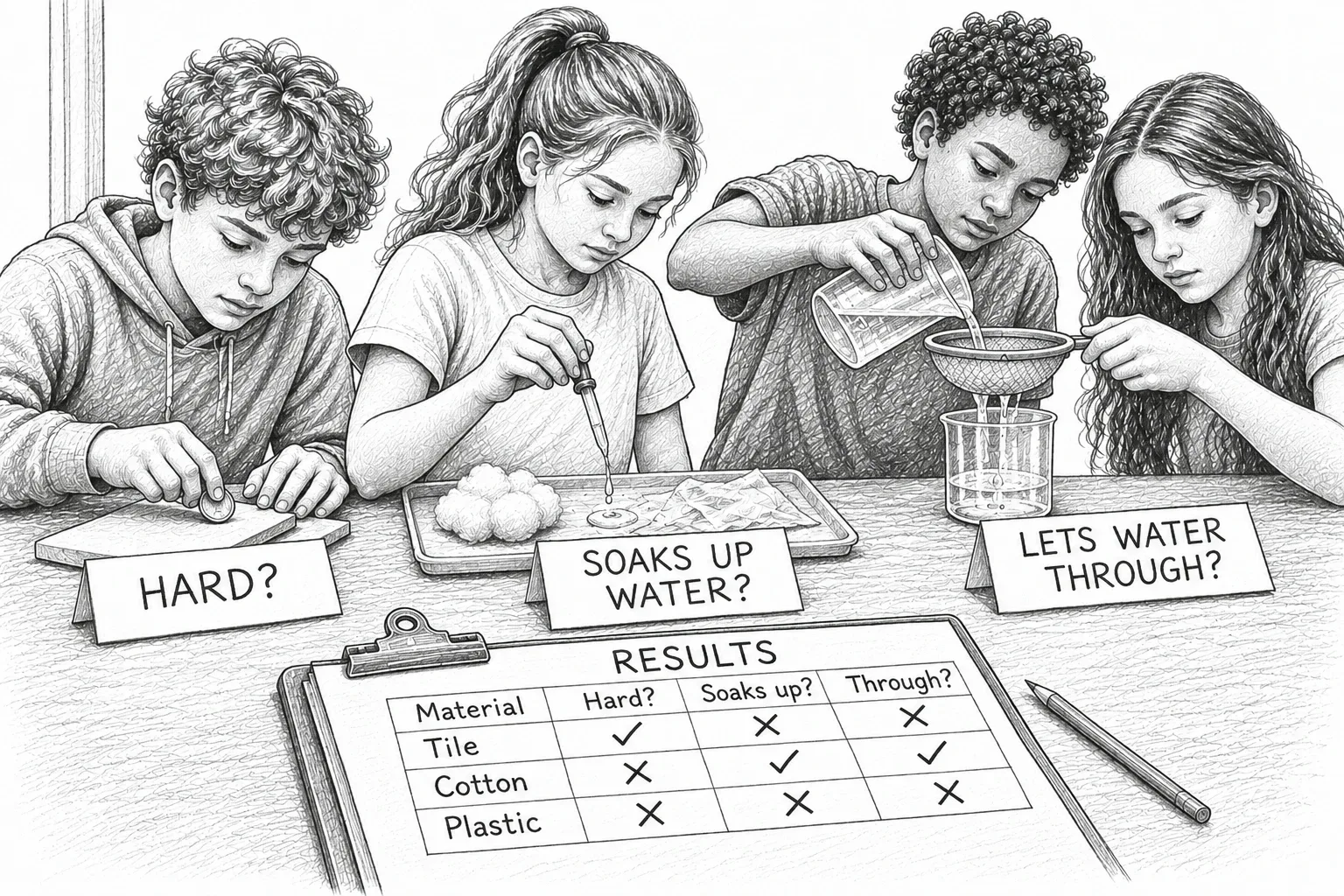
The Clean Water Challenge: material properties, particles and separation, used to design and evaluate a real filter.
Quests in Early Years and Primary, and unit books and portfolios in Secondary, give every Theme a real challenge, a product and an audience. Learners work with real people in their own community, and with experts and practitioners who bring the domain to life. Learning that has a purpose and an audience is learning that lasts.
Chapter 5
Mastery, credits and evidence
Progress is based on demonstrated understanding, not time spent. Every Concept Capsule uses the same thresholds:
Below 80%: Reteach
Not secure yet, which is normal while learning. The capsule is retaught with fresh explanations and Micro Checks. The credit is paused, never failed.
80–89%: Secure
The learner explains it in their own words without prompting. When every capsule in a Theme is secure, the Theme's credit is awarded.
90% and above: Stretch
Mastery: the learner applies the idea to new, unfamiliar problems and explains their reasoning.
Rubric tiers
Emerging, Developing, Mastering, Innovating, judged across six things every learner is assessed on, from knowledge and reasoning to application, investigation, communication and reflection.
Credits represent secured mastery, not seat time. Evidence is gathered continuously, not in a single end-of-topic test, and builds into a portfolio that makes learning visible to families, local education authorities, universities and future employers. Learners start at the phase that fits their evidence, through placement, not age.
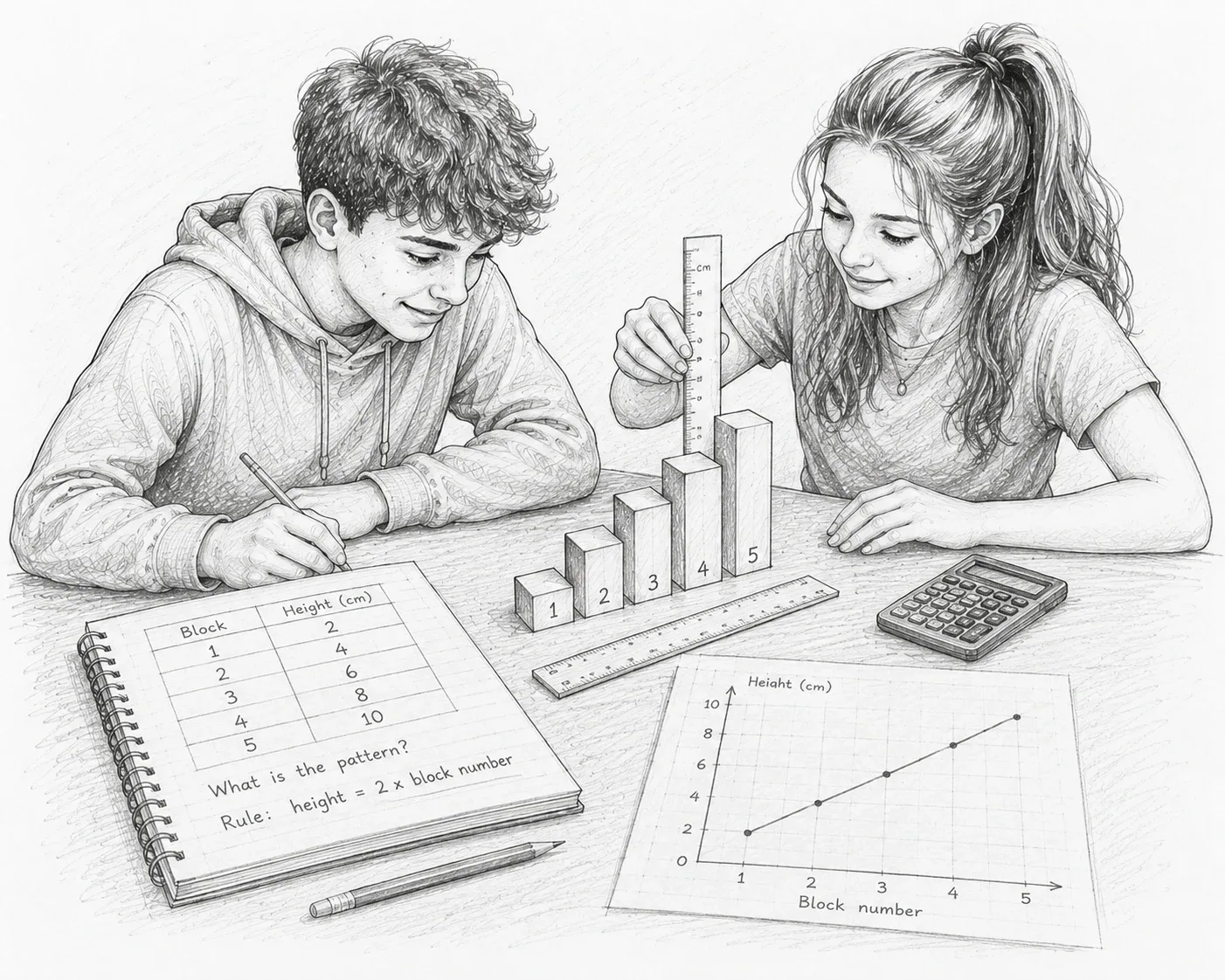
Evidence, not seat time: measure it, tabulate it, find the rule, graph it, explain it.
Chapter 6
Standards, honestly
Every Concept Capsule is mapped against six frameworks: the UK (National Curriculum, GCSE and A-Level), the International Baccalaureate, the United States (NGSS for science, Common Core for English and Mathematics), Texas TEKS, Florida, and the Finnish National Core Curriculum.
The EIC was not designed to teach standards. It was designed to develop knowledgeable, capable and flourishing young people, and the standards were mapped afterwards, as evidence of compatibility. That is why the mapping uses three honest classes:
Direct Alignment
Addresses the named standard directly.
Enhanced Alignment
Addresses the standard and takes it further in depth or application.
Advanced Extension
Goes beyond what the named frameworks ask of school-age learners. Where learning exceeds a state's standards, we say so, rather than forcing it into a code.
Curriculum to standards
Our pages show which standards each capsule addresses, capsule by capsule, so the mapping can be checked rather than simply trusted.
The rigour curve tells the story: in Biology, 0% of Phase 1 content sits beyond every named standard, rising to 59% by Phase 4, because depth grows only as a learner's reasoning matures. In English, beyond-standard learning starts at 17% in Phase 1, because language, identity and power can be taught well from age 10.
Chapter 7
What the accreditors found
ExelAcademy is accredited by GOER and Provisions Plus+ on the Online Alternative Provision pathway. The accreditation looked across four domains: safeguarding, quality of education, admissions and support, and leadership and governance. Here is what it found, in its own words.
“Exceptionally comprehensive, coherent and evidence-informed, with strong intent around mastery, personalisation, learner agency and ethical use of AI.”
GOER, Domain 2: Quality of Education
A clear educational identity
“A clear educational identity, substantial policy development and a thoughtful model for combining academic learning, personalisation, mentoring and AI-enabled support.”
Curriculum
“One of Exel Academy's clearest strengths”, with “an explicit rationale and a planned structure”, which “provides the basis for sequencing knowledge, adapting learning and connecting academic content to purposeful application.”
Every learner belongs
“Strong relational, trauma-aware and neurodiversity-informed thinking, thoughtful engagement approaches and particularly strong family partnership.” Support “is conceived as part of learning rather than as a separate service around it.”
Safe by design
“A substantial safeguarding framework” with identified leadership, structured individual and online risk assessment, and “human oversight of AI-supported safeguarding.”
Leadership and governance
“A mature policy framework, clear learner-centred values, robust safer-recruitment intentions and strong information-governance arrangements.” Student representation was noted as a positive feature.
Self-aware by design
Leadership's own analysis of risk was described as “a positive sign of organisational self-awareness”.
For families and schools, that means a curriculum built on belonging rather than labels: inclusive by design, for learners who thrive in conventional settings and for those who haven't been served well by them.
Chapter 8
Subject by subject
Each subject has been through a Curriculum Quality Review covering its structure, academic rigour, standards alignment, Applied Learning and ethos. Here are the findings.
Phases 1–4 · ages 10–18
Mathematics
“Of a high standard with a distinctive educational identity: coherent, developmental and compatible with recognised national and international standards without sacrificing its own philosophy.”
Mathematics Curriculum Quality Review
What sets it apart
Concept first: understanding is built before procedural fluency, not after it.
Thinking is made visible. Learners meet “How am I thinking?” and “Why does this matter?” throughout, so they learn to reason, not just to calculate.
Knowledge, cognition, human capability, authentic application and AI-supported learning are integrated in one model, which the review judged substantially beyond a conventional syllabus.
Mapped to the English National Curriculum, the IB, Common Core, Texas TEKS, Florida B.E.S.T. and Finland.
Built for adaptive AI tutoring, mastery tracking and evidence-based assessment, with AI as a learning partner under Human Authority, never a replacement for teachers.
Patterns, rules and proof
Learners don't memorise “2n”. They build a growing pattern, measure it, tabulate it, find the rule, test it on a new case and present why it must be true. That is the move from arithmetic to algebraic thinking, made visible.
Knowledge into doing
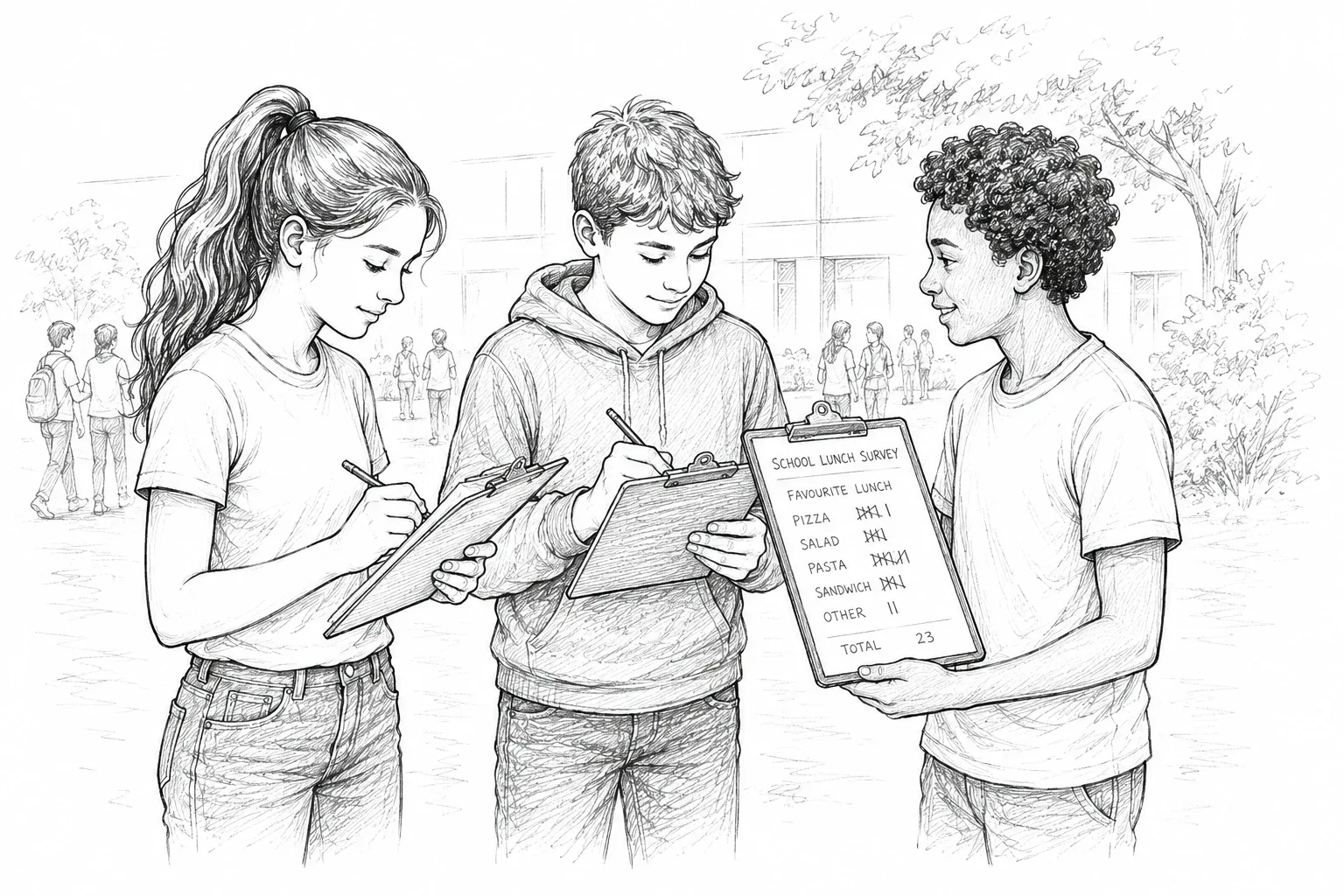
A school lunch survey becomes statistics with a purpose: learners design the questions, collect and tally real data, choose the right representation, and present a recommendation to the people who run the kitchen.
Real questions, real data, a recommendation to real people.
Where it's growing
Mathematics is growing a cross-phase set of ExelAcademy Mathematical Practices (Notice Structure, Model Reality, Construct Arguments, Attend to Precision, Evaluate Evidence), an explicit retrieval and spaced-review layer, Mathematical Habits of Mind, and university-style research investigations in Phase 4.
Phases 1–4 · ages 10–18 · 103 Concept Capsules
English Language & Literature
“A coherent, rigorously mapped programme that meets recognised standards in full and, in a genuine and growing minority of its content, moves beyond what any of the frameworks examined currently name for school-age learners.”
English Language & Literature Curriculum Quality Review
Phase 1 · Foundations of Voice and Story
Phase 2 · Interpretation and Authorial Craft
Phase 3 · Critical Discourse and Ethical Argument
Phase 4 · Independent Scholarship and Civic Voice
What sets it apart
Authorial voice runs through every phase. Creative Futures is a named Theme from Phase 1 to Phase 4, growing from guided creative writing to a curated, intertextual portfolio and, in Phase 4, full editorial and publication practice.
Critical and civic literacy is core content: ideology, fallacy, media power and discourse have their own Core Facts, misconceptions and evidence tasks, taught with the same rigour as grammar.
Language, identity and power are taught from age 10, so beyond-standard learning appears from Phase 1, not only at the end.
The IB pathway is tracked stage by stage, PYP to MYP to the Diploma Programme's English A: Language and Literature.
A visible, resolved quality history: every issue found during review was corrected and documented. The review called that transparency “itself evidence of the curriculum's underlying quality”.
% of Concept Capsules beyond every named standard
Phase 117%
Phase 220%
Phase 320%
Phase 433%
Against the pre-university ceiling
Phase 4 reaches the AP English, IB English A HL and A-Level ceiling in its core and goes beyond it in two places: linguistics, semiotics and the cognitive science of language as a sequenced Theme, and critical discourse analysis, media control and language-and-law as assessed content. Studio of Words turns the IB's single Higher Level Essay into a repeated cycle of proposal, research, creation and presentation.
Against the typical classroom
Many secondary English classrooms concentrate on comprehension, essay structure and a narrow set of texts. Named critical lenses, formal fallacy analysis and independent linguistic research often appear only for students who opt into further study. In the EIC, Phase 3 makes them explicit, assessed content.
Knowledge into doing
Learners don't just analyse persuasion; they research a real issue, write for a real audience, and defend their argument in public, with evidence and counter-argument.
Where it's growing
English is moving to capsule-by-capsule classification, the more precise method developed in Biology, and setting out its UK pathway (KS3, GCSE, A-Level) in one clear statement.
Phases 1–4 · ages 10–18 · 96 Concept Capsules
Biology
“This curriculum earns its comparison to the world's strongest pre-university science programmes rather than merely claiming it. On the document itself, the verdict is a confident endorsement.”
Biology Curriculum Quality Review
Phase 1 · Foundations of Living Systems
Phase 2 · Mechanism, Genetics and Systems Reasoning
Phase 3 · Evidence Synthesis and Bioethics
Phase 4 · Frontier Science and Planetary Stewardship
What sets it apart
One architecture across all four phases, with no structural drift, and zero duplicate Core Facts in over 1,400 curriculum rows.
Depth climbs only as reasoning matures: Phase 1 sits entirely within named standards, as it should for ages 10–12, rising to a majority beyond them by Phase 4.
Ethics is core content, not a unit: Genetic Technologies & Ethics and Life Ethics & Society are taught with the same rigour as molecular mechanism.
The six Human Understanding dimensions (Self, Others, Society, Communication, Creativity, Knowledge) are mapped to every capsule, which is unusual for a science curriculum.
Civic and planetary responsibility is the endpoint: Phase 4 concludes with governance, stewardship and the ethical future of engineered life.
% of Concept Capsules beyond every named standard
Phase 10%
Phase 25%
Phase 324%
Phase 459%
Against the pre-university ceiling
Computational bioinformatics, applied gene editing, biotechnology governance and AI-driven ecosystem stewardship are not core content in AP Biology, IB Biology HL or A-Level. Phase 4 teaches them as dedicated, assessed strands. Life Ethics & Society has no real equivalent in any of the three.
Against the typical classroom
Most learners worldwide don't reach the NGSS middle-school or GCSE Combined Science baseline that the EIC delivers by the end of Phase 2. Active transport, enzyme kinetics and hormonal feedback are often simplified or left to the final years elsewhere; here they are taught with accuracy from Phase 2.
Knowledge into doing
Biology is applied to bodies, food, health and ecosystems: learners model systems, test predictions, weigh evidence from several sources and argue ethical questions with the science in hand.
Where it's growing
Frontier capsules, such as AI and planetary stewardship, and genetic data and bioinformatics, are reviewed on a shorter cycle so they stay current with fast-moving science.
Phases 1–5 · ages 10–19
Chemistry
“A coherent and potentially powerful design for rigorous, inquiry-rich science education. Chemistry should not end when a learner can repeat an explanation; it should become visible when the learner can use that explanation to investigate, design, evaluate and act responsibly.”
Chemistry Curriculum Quality Review
Phase 1 · Materials, properties and the changes we can see
Phase 2 · Matter, measurement and early particle models
Phase 3 · Atoms, reactions, energy and practical evidence
Phase 4 · Bonding, structure, rates and quantitative chemistry
Phase 5 · Organic mechanisms, electrochemistry and thermodynamics
What sets it apart
A five-phase arc from familiar materials and measurable properties to mechanisms, structure and complex chemical systems.
Conceptual instruction and practical application are deliberately distinct: a defensible model first, then the experiment, where it adds intellectual value.
The ExelTutor cycle (Recall, Teach, Try, Check, Evidence, Next Steps) and a firm rule: no credit without evidence.
Learners can take different contexts, evidence formats and levels of extension while being held to the same essential chemistry and the same quality thresholds.
Rigour is more than difficulty
Conceptual accuracy (observation or explanation?), quantitative competence (units, calculation, uncertainty), experimental validity (fair, repeatable, safe), transfer (an unfamiliar material or reaction) and communication (defend a conclusion, recognise limits, revise a claim).
Knowledge into doing
Choose lower-impact packaging, investigate corrosion in a local setting, evaluate a battery design, or test the claims on household products: each begins with a real problem, draws on the capsules it needs, and ends in evidence and a decision.
Phase 1: properties tested, recorded and explained, not just listed.
Where it's growing
Chemistry is publishing phase-specific mastery descriptors with representative assessed work for each capsule.
Phases 1–5 · ages 10–19
Physics
“A coherent, ambitious and unusually application-ready curriculum design. It has deliberately built the conditions for knowledge, reasoning and authentic application to reinforce one another: a substantial and defensible curriculum-design advantage.”
Physics Curriculum Quality Review
Phase 1 · Measure and explain familiar phenomena
Phase 2 · From description to relationships, models and prediction
Phase 3 · Precise mathematical and physical explanation
Phase 4 · Interconnected systems and abstract models
Phase 5 · Relativity, quantum mechanics and experimental judgement
What sets it apart
Sequenced from familiar, observable systems to mathematical models, then to modern physics: electromagnetic induction and the photoelectric effect in Phase 4; relativity, quantum mechanics and black holes in Phase 5.
Concept, misconception, application and evidence are connected routinely across the whole curriculum, not added as a project after the topic.
Practical work is a place to test predictions and refine explanations, not a separate activity after the theory.
Where learning goes beyond state standards, it's shown as Advanced Extension rather than forced into a code.
Four tests of rigorous learning
Can the learner explain the governing principle accurately? Use it to predict or solve an unfamiliar problem? Test that prediction with evidence and uncertainty? Defend its limitations and its ethical or practical implications?
Knowledge into doing
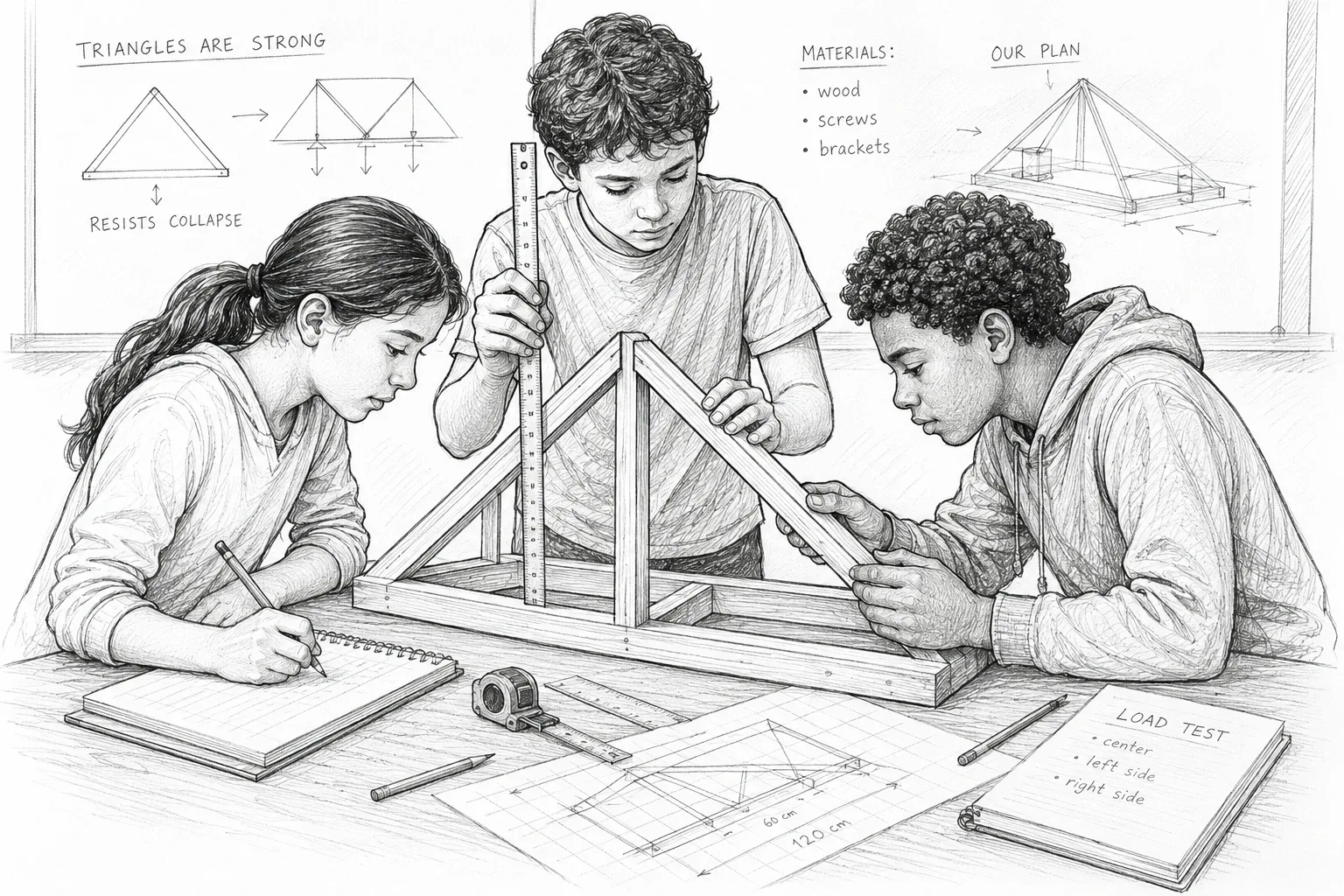
Design a safer journey, keep a community space cool without power, improve a small renewable-energy system, or investigate how we know about the universe: physics explains systems learners can see, build, measure and improve.
Forces become a design problem: plan, build, measure, load-test, improve.
Where it's growing
Physics is building a bank of transfer tasks and practical investigations that show learners applying each Phase's models to unfamiliar problems.
Phases 1–3 · ages 10–16 · 569 Core Facts
Integrated Science
“A coherent and potentially powerful alternative to fragmented, topic-by-topic science. Its clearest advantage is the deliberate coupling of essential knowledge with investigation, misconception correction, evidence, human capability development and authentic community-facing projects.”
Integrated Science Curriculum Quality Review
What sets it apart
Not a shortened version of three sciences: Biology, Chemistry and Physics are brought together in five connected Themes, with Working Scientifically woven throughout, then hand over to the separate sciences in Phase 4.
Every Core Fact carries a Micro Check, a misconception, the evidence to produce and a stretch challenge. Misconceptions such as “heavy things sink” become prompts for testing.
Phase 1 is fully specified: each Theme is organised around a real challenge with a product, an audience and a Community Impact Pathway, with scripted teacher support (what to Say, Do and Listen for).
Cross-curricular links to Mathematics, English, Geography, History, Design & Technology, Global Citizenship and Economics are planned, not just recommended.
Five Themes, five real challenges
Matter & Change: The Clean Water Challenge. Energy: Cool Without Power. Forces, Fields & Waves: Mission: Safe Landing. Living Systems & Health: The Living Machine Exhibition. Life on a Changing Planet: Wild Neighbours.
Knowledge into doing
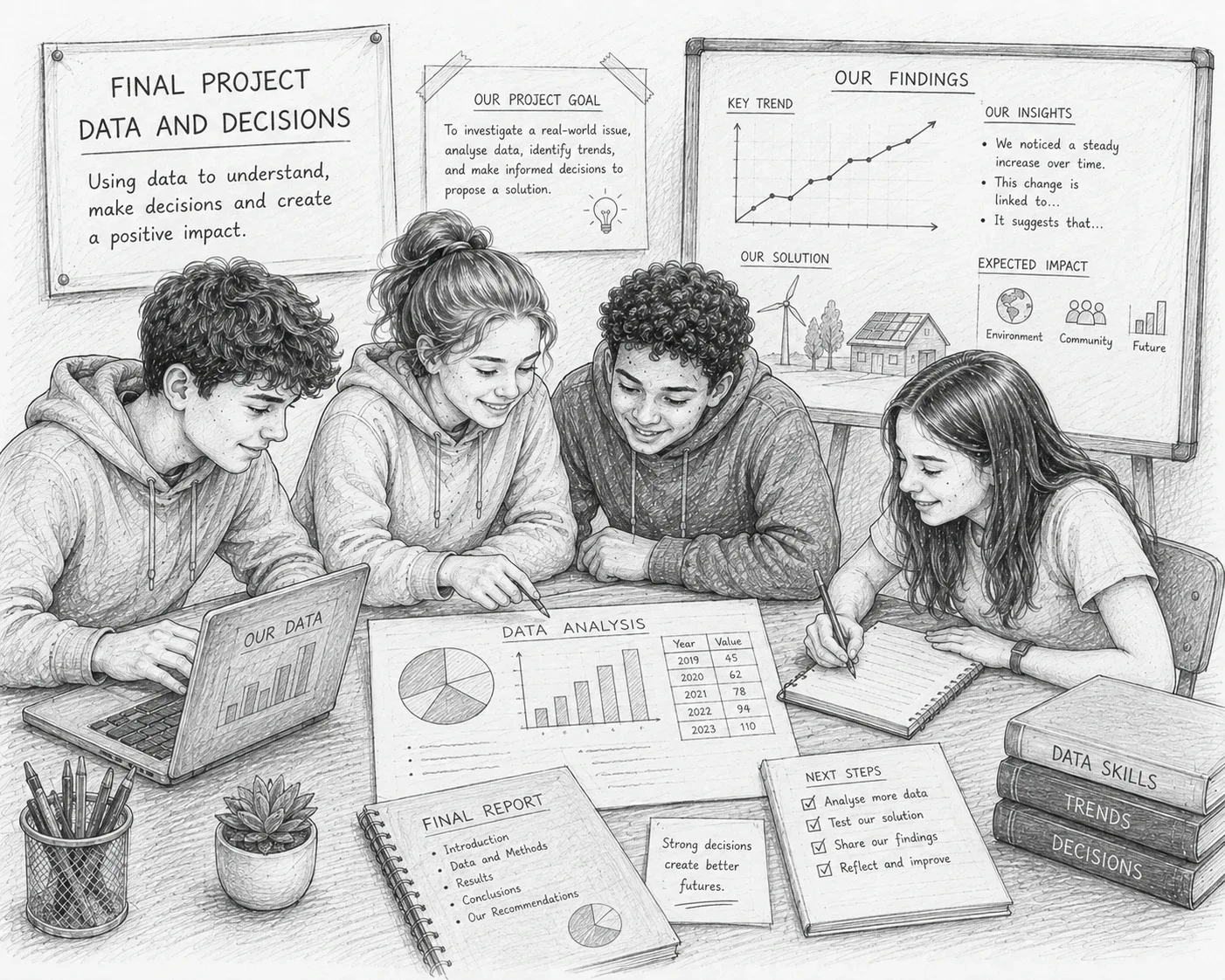
The project is the reason to learn the science, and the science makes the project work. Learners analyse data, identify trends and propose solutions with an expected impact on their environment and community.
Data and decisions: findings, insights, a solution and its expected impact.
Where it's growing
Integrated Science is extending its fully specified project and teacher-support materials from Phase 1 into Phases 2 and 3.
Chapter 9
A curriculum that keeps growing
The EIC is a living curriculum. Every subject has been reviewed, every review names its next stage, and the curriculum grows through them, the way strong academic institutions do:
Frontier content, from AI to biotechnology, is reviewed on a shorter cycle so it stays current.
Mathematical Practices, retrieval and spaced review, and research pathways are being added across phases.
Standards codes are published only once the code, its wording and the curriculum evidence have been verified, and the mapping deepens subject by subject.
Every learner's work, mastery evidence and portfolio feeds back into how the curriculum is taught and refined.
A curriculum's quality is better evidenced by a visible audit trail than by a claim that nothing could be improved. That openness is part of what makes this one worth trusting.